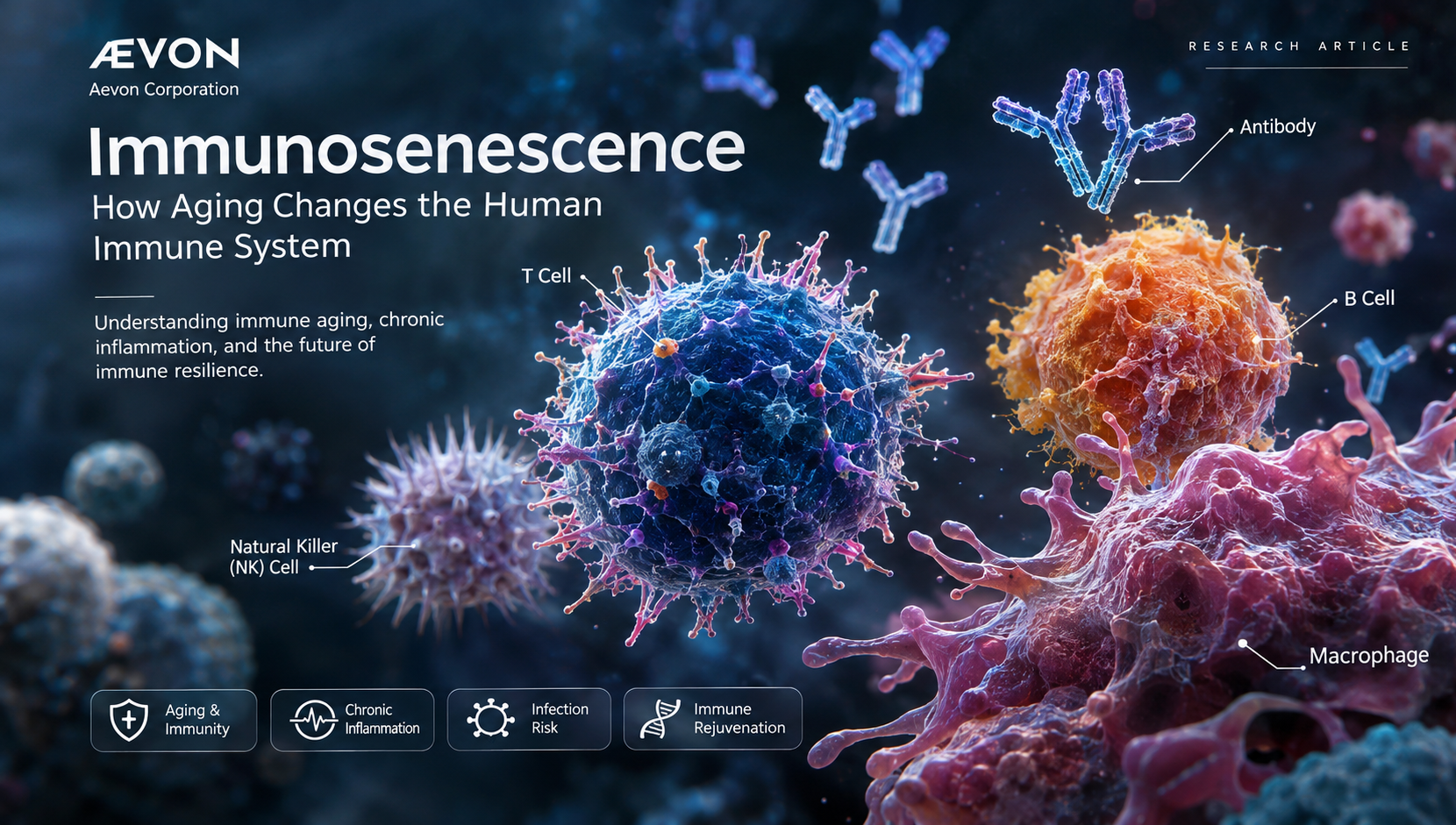
Immunosenescence: How Aging Changes the Human Immune System
Understanding the Biological Mechanisms of Immune Aging, Chronic Inflammation, and the Future of Human Longevity
ÆVON CORPORATION | Research & Knowledge Base
Category: Aging Biology | Research Areas: Immunology · Longevity Research · Biotechnology
Abstract
Aging is a complex biological process involving progressive changes across cells, tissues, organs, and physiological systems. Among these changes, the transformation of the immune system is particularly important because it influences the body's ability to defend against infections, regulate inflammation, and maintain tissue health.
This process, known as immunosenescence, describes the age-associated remodeling and functional deterioration of the immune system. It affects both innate and adaptive immunity, changing how the body recognizes pathogens, responds to infections, develops immune memory, and eliminates abnormal cells.
As the immune system ages, the production of new immune cells can decline, existing immune-cell populations undergo functional changes, and inflammatory activity may become persistently elevated. These alterations are associated with increased susceptibility to infections, reduced vaccine responses, and a greater burden of several age-related diseases.
A closely related phenomenon, known as inflammaging, describes the chronic, low-grade inflammatory state associated with aging.
Modern research increasingly recognizes that immunosenescence is not simply a consequence of aging but may also contribute to broader physiological deterioration. Understanding these interconnected processes is therefore an important objective in longevity science.
This article examines the biological mechanisms of immune aging, its consequences for human health, evidence-based approaches to supporting immune function, and emerging research into immune rejuvenation.
1. Introduction: The Immune System and the Biology of Aging
The human immune system is a sophisticated biological defense network consisting of specialized cells, tissues, organs, proteins, and molecular signaling pathways.
Its primary responsibility is to protect the body against harmful microorganisms, including viruses, bacteria, fungi, and other potential threats. It also participates in removing damaged cells, regulating inflammation, and maintaining tissue homeostasis.
However, the immune system does not remain biologically unchanged throughout life.
As humans age, the composition and behavior of immune cells gradually change. Certain protective responses become less effective, while some inflammatory processes become increasingly difficult to regulate.
Scientists describe these age-associated changes as immunosenescence.
Importantly, immunosenescence does not mean that the immune system simply stops working. It represents a complex remodeling of immune activity in which certain protective mechanisms become less effective while other inflammatory activities may become excessive or poorly regulated.
Research suggests that immune aging can influence other organs and tissues through inflammatory signaling, changes in cellular surveillance, and altered tissue-repair mechanisms.
This makes immunosenescence an important subject in the study of biological aging and human longevity. [1–4]
2. What Causes Immunosenescence?
Immunosenescence does not originate from one isolated biological event. It develops through interactions between cellular damage, genetic regulation, metabolic changes, environmental exposure, and alterations in immune-cell production.
Several major mechanisms contribute to this process.
2.1 Thymic Involution: The Declining Production of New T Cells
The thymus is a specialized organ located behind the breastbone. It plays a fundamental role in the development and maturation of T lymphocytes, commonly known as T cells.
T cells are essential components of adaptive immunity. They recognize specific antigens, coordinate immune responses, and help eliminate infected or abnormal cells.
During childhood, the thymus is relatively active. However, after puberty, it gradually undergoes a process known as thymic involution.
During this process:
-
Functional thymic tissue progressively decreases.
-
Fatty tissue increasingly replaces functional thymic tissue.
-
Production of new naïve T cells declines.
-
The immune system becomes increasingly dependent on previously generated T-cell populations.
Naïve T cells are particularly important because they allow the immune system to recognize unfamiliar pathogens.
As their production decreases, the diversity of the T-cell receptor repertoire can become restricted.
Why does this matter?
A reduced supply of diverse naïve T cells may make it more difficult for older individuals to mount effective immune responses against unfamiliar infections.
Thymic involution is one of the best-established structural changes associated with immune aging. [1, 3, 4]
2.2 Telomere Shortening and Cellular Senescence
Telomeres are protective structures located at the ends of chromosomes. They help protect genetic material during cellular division.
In many dividing cell populations, telomeres progressively shorten as cells replicate. When telomeres become critically short or dysfunctional, cellular stress responses can activate.
One possible outcome is cellular senescence.
Cellular senescence is a state in which a cell permanently or persistently stops dividing while remaining metabolically active.
Some senescent cells release inflammatory signaling molecules, collectively described as the senescence-associated secretory phenotype (SASP).
These substances may influence neighboring cells and contribute to tissue inflammation.
Repeated activation and proliferation of immune cells can also contribute to changes in their telomere length and functional capacity.
However, telomere shortening is only one component of immune aging. It does not independently explain the entire process. [1, 3, 4]
2.3 Mitochondrial Dysfunction and Oxidative Stress
Mitochondria are cellular structures responsible for producing much of the energy required for normal cellular activity.
Immune cells require substantial amounts of energy to activate, multiply, communicate, and respond to pathogens.
As organisms age, mitochondrial structure and function can change.
These changes may involve:
-
Altered energy production.
-
Disturbed metabolic signaling.
-
Increased oxidative stress in certain circumstances.
-
Changes in mitochondrial quality control.
-
Impaired immune-cell activation and regulation.
Mitochondrial dysfunction can therefore influence the effectiveness of immune responses.
Scientists are investigating the relationship between mitochondrial metabolism and immune-cell aging as a potential therapeutic research area. [3–5]
2.4 Hematopoietic Stem-Cell Aging
Most blood and immune cells originate from hematopoietic stem cells located primarily in the bone marrow.
These stem cells maintain the production of red blood cells, white blood cells, and platelets throughout life.
With aging, hematopoietic stem cells undergo changes in their regenerative capacity, gene expression, and differentiation patterns.
These changes can influence the balance between different immune-cell populations.
Consequently, the production of certain immune cells may become less effective or less balanced.
This process is important because the quality of the immune system depends not only on existing immune cells but also on the body's ability to continually generate new ones. [3, 4]
2.5 Chronic Antigen Exposure
Throughout life, the immune system encounters numerous pathogens and foreign antigens.
Repeated immune stimulation can change the composition of immune-cell populations.
Some immune cells become highly differentiated after repeated activation, while others may develop features of exhaustion or senescence.
Persistent viral infections, including cytomegalovirus (CMV), have been associated with substantial changes in T-cell populations in some individuals.
These changes can influence immune diversity and responsiveness. [1, 3]
3. How Aging Changes Different Immune Cells
The immune system contains multiple specialized cell populations. Aging does not affect all of them in exactly the same way.
T Lymphocytes
T cells are central to adaptive immunity.
They include:
-
Helper T cells (CD4+): Coordinate immune responses.
-
Cytotoxic T cells (CD8+): Destroy infected and abnormal cells.
-
Regulatory T cells: Help control excessive immune responses.
-
Memory T cells: Retain information about previously encountered antigens.
With aging, naïve T-cell populations generally decline, while highly differentiated memory and effector populations can become more prominent.
This may reduce the immune system's ability to recognize unfamiliar pathogens.
B Lymphocytes
B cells are responsible for producing antibodies.
Antibodies recognize specific antigens and help the immune system neutralize or eliminate threats.
Age-associated changes in B-cell populations can affect:
-
Antibody diversity.
-
Antibody affinity.
-
B-cell activation.
-
Responses to vaccination.
-
Immune memory formation.
These changes can contribute to reduced vaccine effectiveness in some older populations.
Natural Killer Cells
Natural killer (NK) cells belong to the innate immune system.
They help identify and destroy certain infected or abnormal cells without requiring the same antigen-specific recognition process used by T cells.
During aging, NK-cell populations and their functional characteristics can change.
Their numbers may remain stable or increase in some individuals, while specific cytotoxic functions can become altered.
Macrophages
Macrophages are specialized immune cells involved in recognizing pathogens, removing cellular debris, regulating inflammation, and supporting tissue repair.
Age-related changes can alter their inflammatory signaling and ability to respond to tissue damage.
Neutrophils
Neutrophils are among the first immune cells recruited to many sites of infection.
They help eliminate pathogens through several mechanisms, including phagocytosis and the release of antimicrobial substances.
Aging can alter neutrophil migration, pathogen recognition, and antimicrobial activity.
Dendritic Cells
Dendritic cells help connect innate and adaptive immunity.
They recognize antigens, process them, and present them to T cells.
Changes in dendritic-cell function can affect the activation of adaptive immune responses.
Together, these alterations demonstrate that immunosenescence affects an interconnected biological network rather than a single type of immune cell. [1, 3, 4]
4. Inflammaging: The Connection Between Aging and Chronic Inflammation
One of the most important concepts in modern aging research is inflammaging.
Inflammaging describes the persistent, low-grade inflammatory state associated with aging.
Normally, inflammation is a protective response.
When the body detects an infection or tissue injury, immune cells release signaling molecules that coordinate the response. Once the threat is controlled, inflammatory activity should gradually resolve.
However, aging can disrupt this balance.
Inflammatory signals may remain elevated even without an obvious acute infection.
Important inflammatory mediators include:
-
Interleukin-6 (IL-6).
-
Interleukin-1 beta (IL-1β).
-
Tumor necrosis factor-alpha (TNF-α).
-
C-reactive protein (CRP), an inflammatory marker.
Several biological processes may contribute to inflammaging, including cellular senescence, mitochondrial dysfunction, accumulated tissue damage, altered immune regulation, and changes in the gut microbiome.
Why Is Inflammaging Important?
Persistent inflammatory activity can influence the function of multiple organs and tissues.
It is associated with several age-related conditions, including cardiovascular disease, metabolic disorders, and neurodegenerative diseases.
Immunosenescence and inflammaging can also reinforce each other.
Aging immune cells may produce inflammatory signals, while chronic inflammation can further disturb immune-cell function.
This creates a potentially self-reinforcing biological cycle.
However, inflammaging is not the only cause of these diseases, and elevated inflammatory markers do not automatically indicate that someone has immunosenescence. [2–5]
5. How Immunosenescence Affects Human Health
The consequences of immune aging extend beyond increased susceptibility to infection.
Increased Infection Susceptibility
Older adults can experience increased susceptibility to certain infections and a greater risk of severe complications.
This is partly associated with changes in pathogen recognition, immune-cell activation, and adaptive immune responses.
Reduced Vaccine Responses
Vaccination depends on the immune system's ability to recognize antigens and develop protective immune memory.
Age-related changes in T-cell and B-cell function can reduce vaccine responses in some older adults.
This is one reason vaccination recommendations may differ according to age and individual risk.
Cancer and Immune Surveillance
The immune system participates in identifying and eliminating abnormal cells.
This process is commonly described as immune surveillance.
Changes in immune-cell function may weaken certain aspects of this protective activity.
Immunosenescence is therefore associated with changes in cancer risk and the effectiveness of antitumor immunity.
However, cancer development involves many additional biological factors.
Cardiovascular Disease
Persistent inflammation is associated with atherosclerosis and other cardiovascular processes.
Immune-cell activity can influence inflammation within blood vessels and atherosclerotic plaques.
Neurodegenerative Diseases
The immune system also communicates with the brain.
Microglia, the resident immune cells of the central nervous system, play important roles in maintaining brain health.
Age-associated changes in inflammatory signaling and microglial function are being investigated in relation to neurodegenerative conditions.
Impaired Tissue Repair
Immune cells participate in removing damaged tissue, coordinating repair, and regulating inflammation.
Altered immune function can therefore influence the body's response to injury and tissue regeneration.
These associations do not mean that immunosenescence directly causes every age-related disease. Genetics, environment, and other biological processes also contribute. [1–4, 6]
6. Can Immunosenescence Be Prevented or Slowed?
Currently, there is no scientifically established method that completely prevents immunosenescence or stops normal immune aging.
Nevertheless, evidence-based health interventions can support immune function and reduce additional risk factors.
Balanced Nutrition
Adequate nutrition supports normal immune-cell development and function.
A balanced dietary pattern should include:
-
Sufficient protein.
-
Fruits and vegetables.
-
Whole grains.
-
Pulses and legumes.
-
Healthy fats.
-
Essential vitamins and minerals.
Nutritional deficiencies, particularly involving nutrients important for immune function, should be identified and addressed appropriately.
There is currently no specific food that has been demonstrated to reverse immunosenescence.
Regular Physical Activity
Physical activity supports metabolic health and immune regulation.
Appropriate exercise may include:
-
Walking.
-
Cycling.
-
Resistance training.
-
Moderate aerobic exercise.
-
Balance and flexibility activities.
Regular physical activity is associated with several benefits for healthy aging.
Adequate Sleep
Sleep plays an important role in immune regulation.
Poor sleep can influence inflammatory signaling and immune responses.
Maintaining consistent sleep habits supports overall health.
Vaccination
Age-appropriate vaccination is an important public-health strategy.
Vaccines help prepare the immune system to recognize specific pathogens and reduce the risk of serious infectious disease.
Avoiding Tobacco
Smoking can damage tissues and interfere with immune function.
Avoiding tobacco is an important measure for protecting long-term health.
Managing Chronic Conditions
Appropriate management of diabetes, obesity, cardiovascular risk factors, and other chronic conditions can support overall health.
An important scientific distinction: These interventions support general health and immune function. They should not be presented as proven methods of reversing biological immune aging. [1, 4]
7. Emerging Research: Can Scientists Rejuvenate the Aging Immune System?
One of the most promising areas of longevity research is the investigation of whether selected aspects of immune aging can be modified.
Researchers are studying several approaches.
7.1 Senolytics
Senolytics are experimental drugs designed to selectively eliminate certain senescent cells.
The objective is to reduce the accumulation of cells that release harmful inflammatory signals.
Dasatinib combined with quercetin has been investigated in preclinical research and early human studies.
However, these compounds are not established treatments for reversing immunosenescence or general human aging.
7.2 Senomorphics
Senomorphics aim to modify harmful activities of senescent cells rather than eliminate them.
Researchers are investigating whether reducing excessive inflammatory signaling could improve tissue function and immune regulation.
7.3 Thymic Regeneration
Because thymic involution contributes to reduced production of naïve T cells, restoring thymic function is an important research objective.
Scientists are exploring biological pathways and interventions that might improve thymic tissue function.
However, safe and reliable thymic rejuvenation has not yet become an established clinical treatment for immune aging.
7.4 Immunometabolism
Immune cells require carefully regulated metabolic processes to function effectively.
Researchers are investigating how mitochondrial activity, nutrient sensing, and metabolic signaling influence immune-cell aging.
This field may provide new approaches to maintaining immune-cell function.
7.5 Stem-Cell and Immune-Cell Research
Hematopoietic stem cells are responsible for generating the body's blood and immune cells.
Researchers are investigating whether age-associated changes in these stem cells can be modified to improve immune-cell production and diversity.
Other research explores engineered immune cells and approaches to restoring immune surveillance.
7.6 Improved Vaccines
Developing more effective vaccines for older populations is another important research direction.
Scientists are investigating how vaccine design, adjuvants, dosing strategies, and immune-response mechanisms can be optimized.
These approaches aim to improve protection against infections even when the immune system has undergone age-related changes. [2–5]
8. The Future of Immunology and Longevity Science
Understanding immunosenescence could influence the future of preventive medicine and longevity research.
Several important research directions are emerging.
Immune-Age Biomarkers
Scientists are investigating whether combinations of immune-cell profiles, inflammatory markers, molecular signatures, and other biological measurements can help characterize immune aging.
Personalized Immunology
Individuals do not age immunologically at identical rates.
Future approaches may use biological measurements to identify differences in immune function and guide more individualized healthcare.
Artificial Intelligence and Immune Research
AI and computational biology may help researchers analyze large datasets involving immune cells, gene expression, proteins, and metabolic pathways.
These technologies could support the identification of previously unrecognized relationships between immune aging and disease.
Immune Rejuvenation
A major long-term research objective is to restore selected protective immune functions without causing excessive inflammation, autoimmunity, or other harmful effects.
The goal should not simply be to make the immune system appear younger according to a laboratory measurement.
It should be to improve meaningful outcomes, including resistance to infection, effective vaccination, tissue health, and healthy lifespan.
9. Scientific Limitations and Unanswered Questions
Despite substantial progress, many questions remain unresolved.
Researchers still need to understand:
-
Which biological mechanisms are the primary drivers of immunosenescence in humans?
-
Can thymic function be safely restored in older adults?
-
Can immune-cell diversity be improved without increasing autoimmune risk?
-
Can senescent cells be selectively removed without harming beneficial cellular functions?
-
Can chronic inflammation be reduced without suppressing necessary immune responses?
-
Can immune-age biomarkers reliably predict future health outcomes?
-
Which interventions improve actual healthspan rather than simply changing laboratory measurements?
A further challenge is that many findings originate from animal studies, laboratory experiments, or relatively small human studies.
Results cannot automatically be translated into proven human treatments.
Long-term clinical trials and carefully designed human studies remain essential.
10. Conclusion: Understanding Immune Aging to Improve Human Healthspan
The immune system is one of the body's most important biological defense and regulatory networks.
Its age-associated transformation affects not only the ability to fight infections but also inflammation, tissue maintenance, cellular surveillance, and communication between organs.
Immunosenescence and inflammaging represent interconnected processes that provide important insights into the biology of aging.
Although scientists cannot yet completely prevent or reverse immune aging, research into cellular senescence, thymic function, immune metabolism, stem cells, and improved vaccination strategies is expanding our understanding of this complex process.
The future of longevity science may depend partly on learning how to preserve immune resilience while maintaining the balance between protective immunity and inflammation.
The objective is not simply to extend the number of years a person lives, but to improve the number of years they can live in good health.
Understanding how the immune system changes with age is an important step toward that objective.
Scientific References
The following peer-reviewed publications provide the scientific foundation for this article.
[1] Goyani, P., Christodoulou, R., & Vassiliou, E. (2024).
Immunosenescence: Aging and Immune System Decline.
Vaccines, 12(12), 1314.
https://doi.org/10.3390/vaccines12121314
[2] Bracken, O. V., De Maeyer, R. P. H., & Akbar, A. N. (2025).
Enhancing immunity during ageing by targeting interactions within the tissue environment.
Nature Reviews Drug Discovery, 24, 300–315.
https://doi.org/10.1038/s41573-024-01126-9
[3] Liu, Z. et al. (2023).
Immunosenescence: molecular mechanisms and diseases.
Signal Transduction and Targeted Therapy, 8, Article 200.
https://doi.org/10.1038/s41392-023-01451-2
[4] Fu, Y., Wang, B., Alu, A. et al. (2025).
Immunosenescence: signaling pathways, diseases and therapeutic targets.
Signal Transduction and Targeted Therapy, 10, Article 250.
https://doi.org/10.1038/s41392-025-02371-z
[5] Kim, H.-H. & Dixit, V. D. (2025).
Metabolic regulation of immunological aging.
Nature Aging, 5, 1425–1440.
https://doi.org/10.1038/s43587-025-00921-2
[6] Ajoolabady, A., Pratico, D., Tang, D. et al. (2024).
Immunosenescence and inflammaging: Mechanisms and role in diseases.
Ageing Research Reviews, 101, Article 102540.
https://doi.org/10.1016/j.arr.2024.102540
Editorial Disclaimer
This article is an educational scientific review based on published research. It does not provide medical advice or claim that experimental approaches can reverse human aging. Therapeutic approaches discussed remain at different stages of scientific and clinical investigation.
ÆVON CORPORATION